How Gothic Is the Gothic Quarter? Roman, Medieval and Neo-Gothic
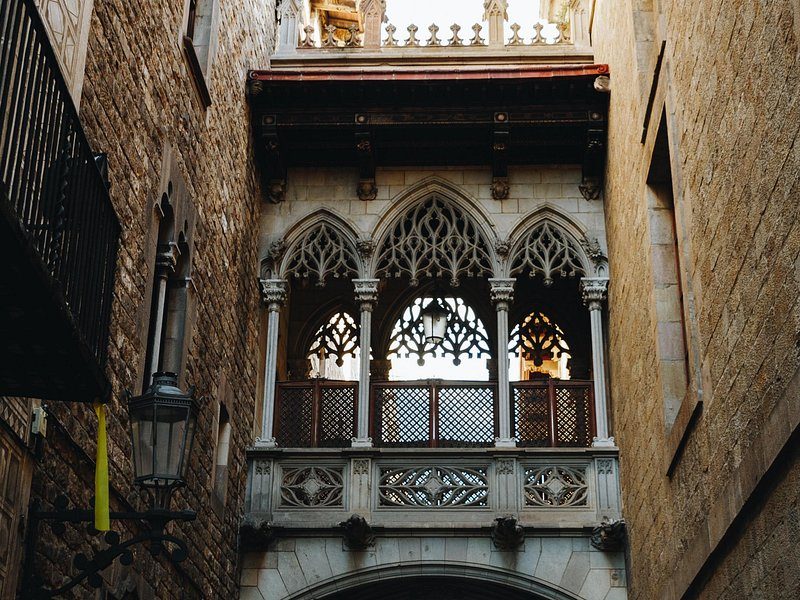
The short answer. Partly. The Cathedral, Plaça del Rei and the lanes around them are medieval. Under them sit the Roman stones of Barcino. But some of the quarter's most photographed details, including the carved bridge over Carrer del Bisbe and the Cathedral's front, were built or rebuilt in the late nineteenth and twentieth centuries.
The name makes a promise. You arrive expecting a medieval city frozen in stone, and in places you get one. In other places you are looking at a careful twentieth-century idea of what a medieval city should look like. Knowing which is which makes your walk more interesting, not less. Here is how to read the layers when you visit with Gothic Quarter Tours.
The Roman layer: Barcino
Barcelona began as the Roman colony of Barcino, on a low hill called Mont Tàber. You can still stand on its highest point. The four columns of the Temple of Augustus, nearly nine metres high with Corinthian capitals, rise inside a courtyard on Carrer del Paradís, and entry is free.
More of the Roman town lies underneath Plaça del Rei. MUHBA, the city history museum, lets you walk through it: a laundry and dye house from the second century, a garum factory from the third, and a winery. The museum ticket costs €7.30.
- Look for: stretches of Roman wall built into later houses.
- Look for: the temple columns, which stood at the axis of the forum.
- Look for: the excavations under Plaça del Rei.
The medieval layer: what is truly Gothic
The real Gothic city is here, and it is large. Work on Barcelona Cathedral began on 1 May 1298 and took about 150 years. Its cloister was finished in 1448, and it is one of the purest Gothic spaces in the quarter.
Plaça del Rei is the other core. The medieval royal palace and its tower of arches enclose the square, and the Saló del Tinell and the Chapel of Santa Àgata are part of MUHBA's visit. El Call, the medieval Jewish quarter, lies a few lanes west. It was violently attacked in 1391, and a small MUHBA centre in the house of Jucef Bonhiac tells its story.
| Sight | What you see | When it was made |
|---|---|---|
| Temple of Augustus | Four Roman columns | First century BC |
| Cathedral cloister | Gothic arcades, garden and fountain | Finished 1448 |
| Plaça del Rei | The medieval royal palace | Middle Ages |
| Cathedral façade | The ornate Gothic-style front | Completed 1913 |
| Pont del Bisbe | The carved bridge over Carrer del Bisbe | Twentieth century |
| Casa Padellàs | A palace on Plaça del Rei | Sixteenth century, moved and rebuilt |
The layer that fools you: the twentieth-century remake
By the late nineteenth century Barcelona wanted its old city to look the part. Over the next decades it restored, cleaned, moved and added stones until the quarter matched its name.
The Cathedral is the clearest case. For centuries its front was a plain wall, closed off in 1417. The Gothic-style façade you photograph today was paid for by Manuel Girona, built to Josep O. Mestres's plans, and completed in 1913.
Buildings moved, too. Casa Padellàs, an early sixteenth-century palace, stood on Carrer Mercaders until it was taken down and rebuilt on Plaça del Rei. Today it is part of MUHBA's visit.
The Pont del Bisbe: medieval in spirit only
The carved bridge over Carrer del Bisbe is the most photographed sight in the Gothic Quarter, and it is the one that surprises people most. It looks as old as the Cathedral beside it. It is a twentieth-century neo-Gothic addition.
That does not make it a fake worth skipping. It is fine stone carving, and it frames the lane exactly as its builders meant it to. Just enjoy it for what it is: a modern bridge in a medieval costume. Where it stands, and what else is on the lane, is on what to see in the Gothic Quarter.
A short route through all three layers
You can see every layer in about an hour on foot, and none of it costs anything unless you go inside. Start at the top of the quarter and work down.
Begin in front of Barcelona Cathedral on Pla de la Seu and look at the 1913 façade. Walk round to Carrer del Paradís for the Temple of Augustus, the Roman layer at the quarter's highest point. Come back along Carrer del Bisbe and under the neo-Gothic bridge. Turn into Plaça Sant Felip Neri to see the 1938 shrapnel marks. Finish in Plaça del Rei, the medieval heart, and go down into MUHBA if you want the Roman town beneath your feet.
The layout of that loop is on Gothic Quarter map and layout. If you would rather go inside the Cathedral as part of it, the prices and Sunday hours are in Barcelona Cathedral tickets and hours.
How to tell the layers apart as you walk
- Look at the stone. Roman blocks are large and squared. Medieval walls are rougher and patched. Neo-Gothic carving is crisp and even.
- Look up. Tracery that is too perfect is usually too young.
- Look for scars. The shrapnel marks of the 1938 air raid on the church of Sant Felip Neri are real, and they are history you can touch.
- Ask a guide. Pointing out which pieces are originals and which are later copies is exactly what a good walking guide does.
Does it matter for your visit?
It changes what you notice. Once you know the façade dates from 1913, you look harder at the cloister behind it, which really is from the 1400s. Once you know the bridge is modern, you start seeing where the old walls end and the restorers began.
A guided walk is the fastest way to learn those clues. Travellers on one walk came away most pleased to learn which pieces they were looking at were later replicas of the originals. The walks that follow the Gothic and neo-Gothic trail are compared on Gothic Quarter walking tours, and the full timeline is on Gothic Quarter history. For the dates at a glance, see Gothic Quarter facts.
Every walk, tapas evening and day tour, side by side with what each fare covers: Gothic Quarter Tours.
See the layers with someone who can date them: a walk past the Pont del Bisbe and Sant Felip Neri takes about two hours.
Walks through the old and the rebuilt
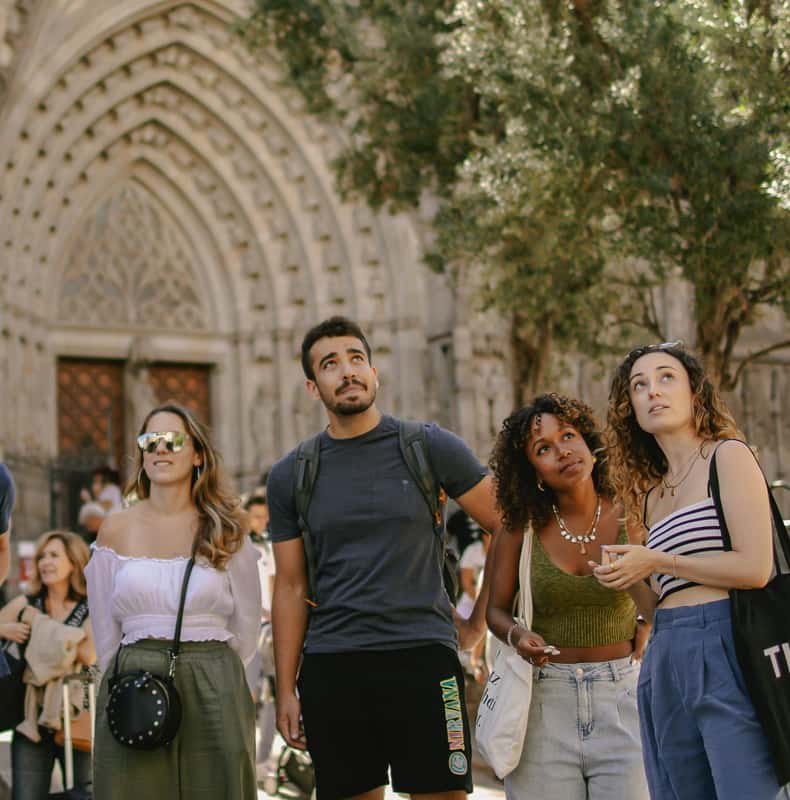
Barcelona: Gothic Quarter Walking Tour with 10+ Sights
Two hours from Plaça del Vuit de Març to Santa Maria del Mar, by way of the Pont del Bisbe and Plaça Sant Felip Neri.
From $22 per person
Check Availability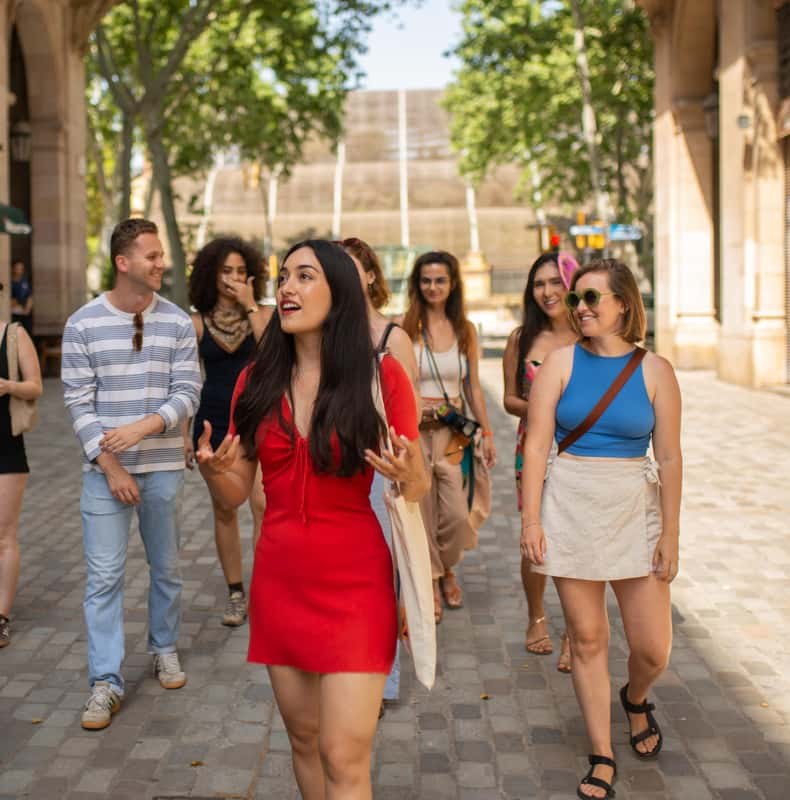
Barcelona Small Group Walking Tour: Gothic and Old Quarter
Two hours from El Born to Els Quatre Gats, with restaurant and rooftop-bar tips sent to you afterwards.
From $25 per person
Check Availability